À contre-pente (The Counter-Slope House)
Potton, Québec
2024
Award of Excellence in architecture
Ordre des architectes du Québec, 2026
—
Inhabiting Topography: A Dialectic of Place
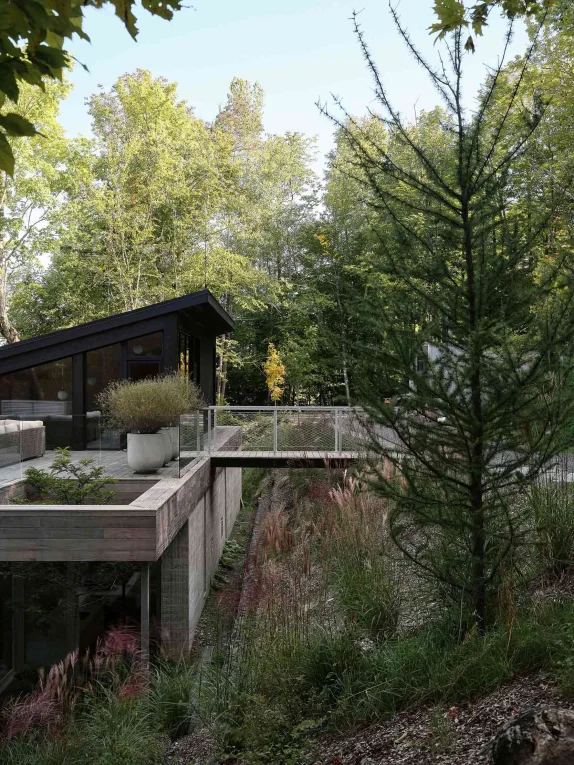
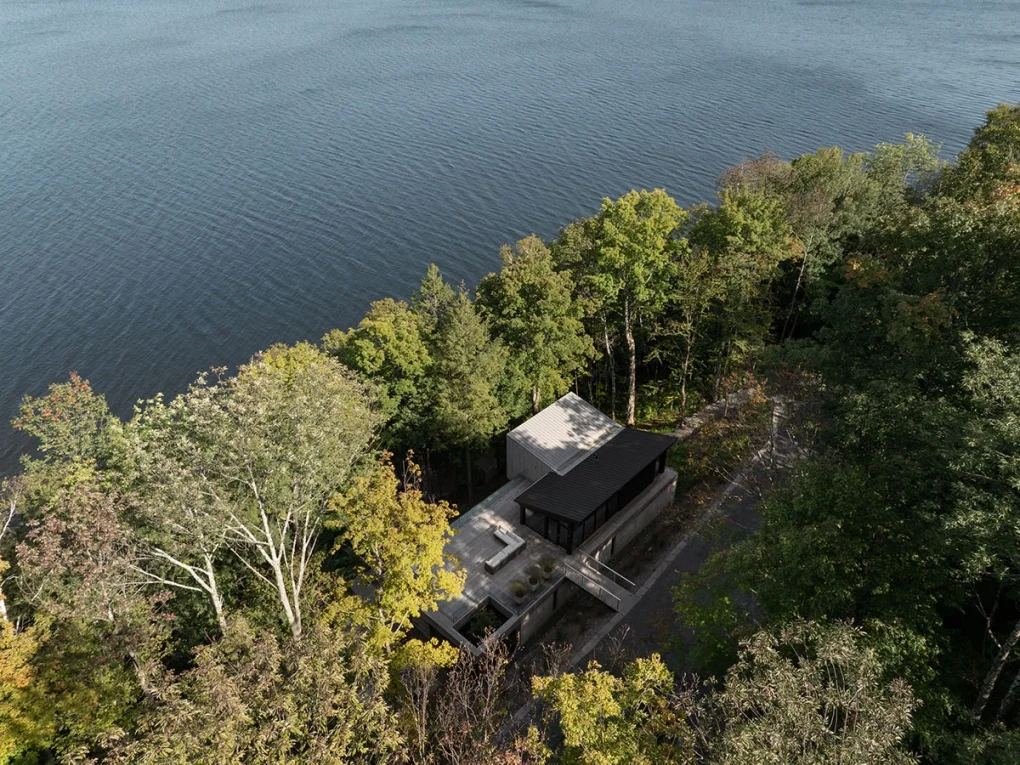
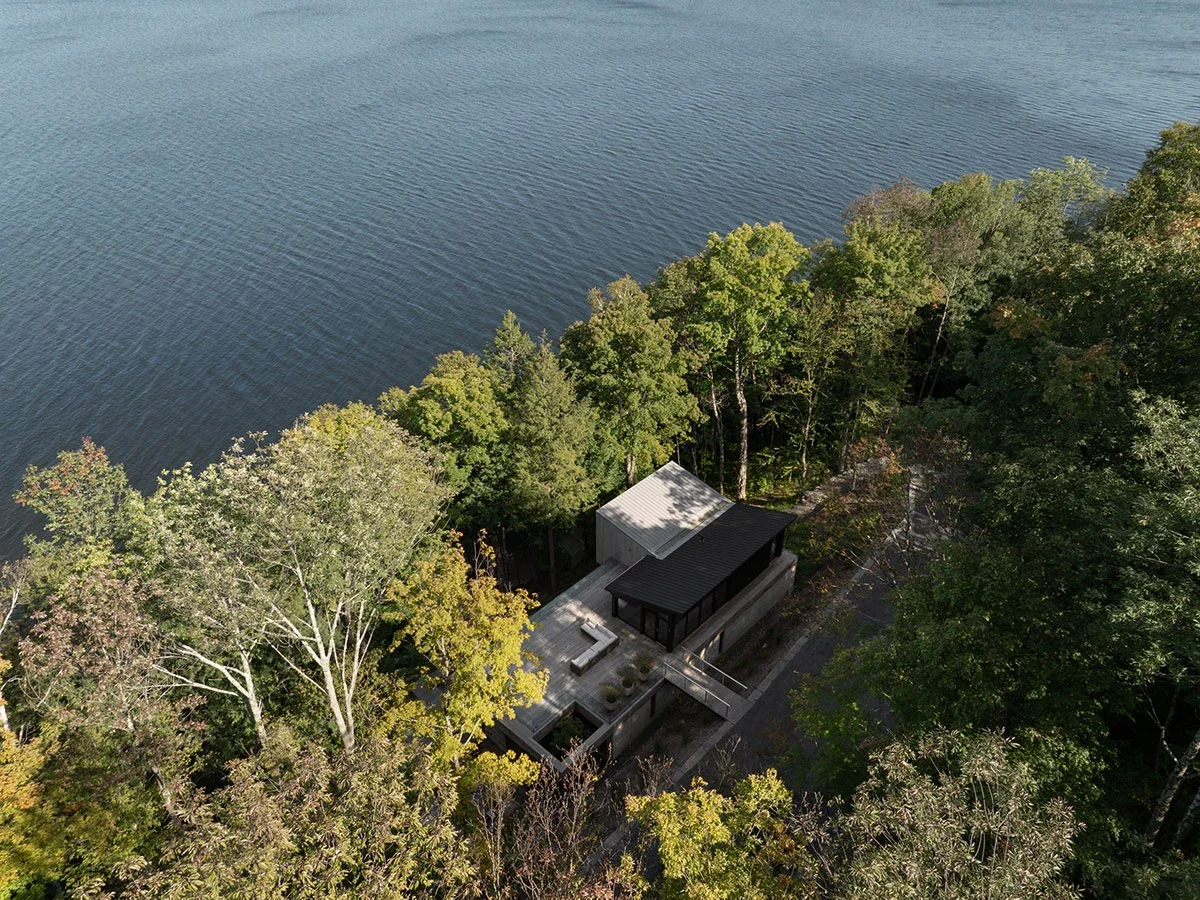
Situated along the shores of Lake Memphremagog in the Potton region, this residence engages with a landscape of powerful geographical and atmospheric intensity. The site, defined by a steep slope plunging into a narrow lakeside strip, is often obscured in the shadows cast from the surrounding stands of trees, generating an atmosphere that is at once archaic and contemplative. The project therefore unfolds as a response to the dramatic nature of the site — an attempt at respectful coexistence with the expressive qualities of the terrain.
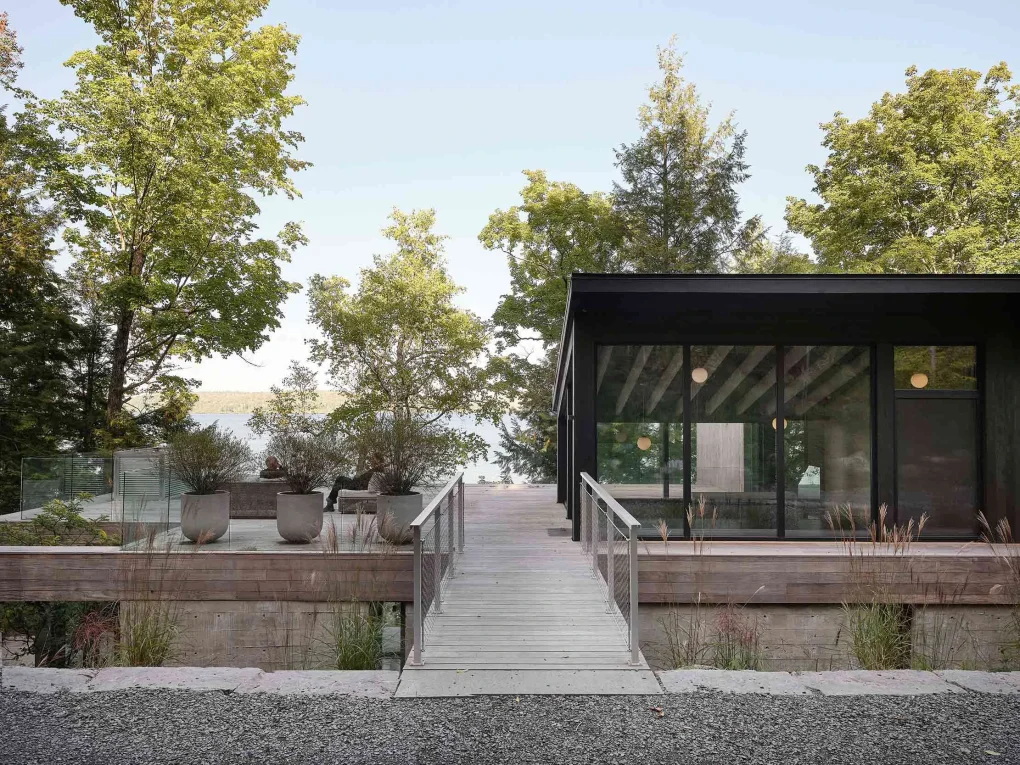
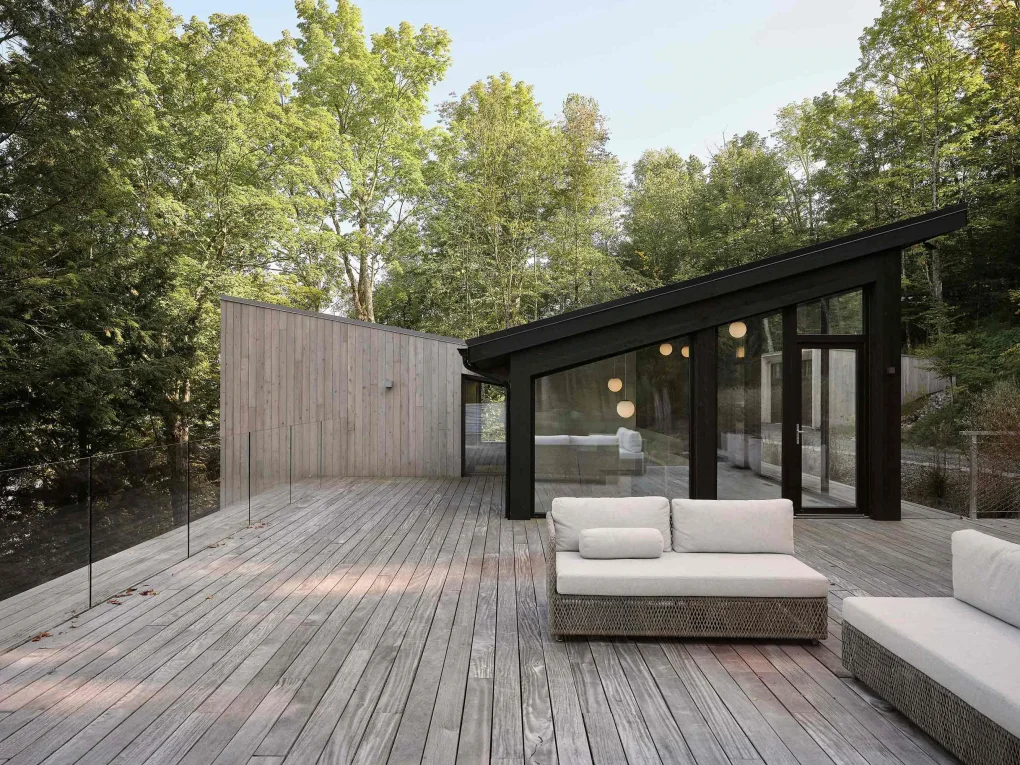
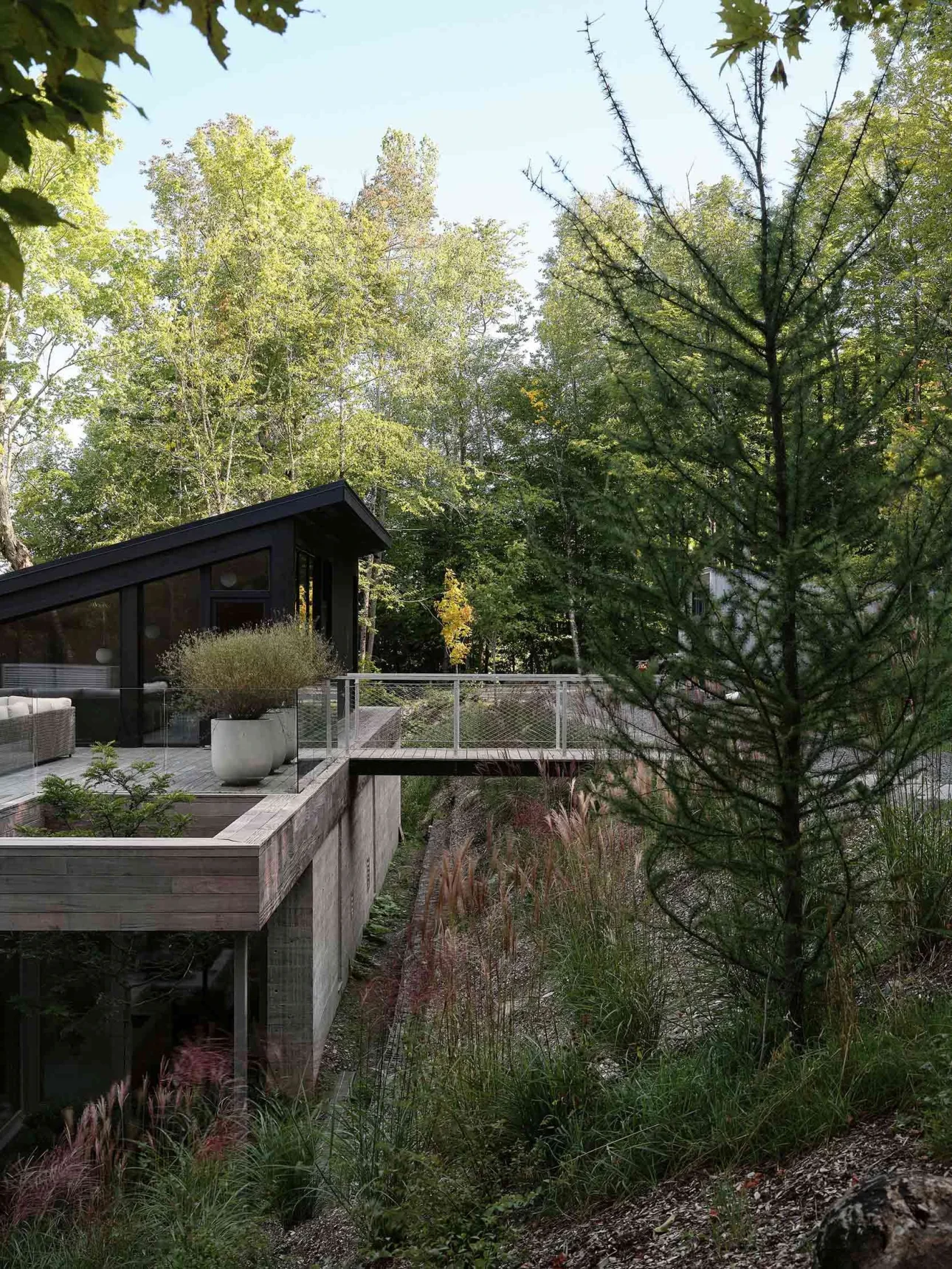
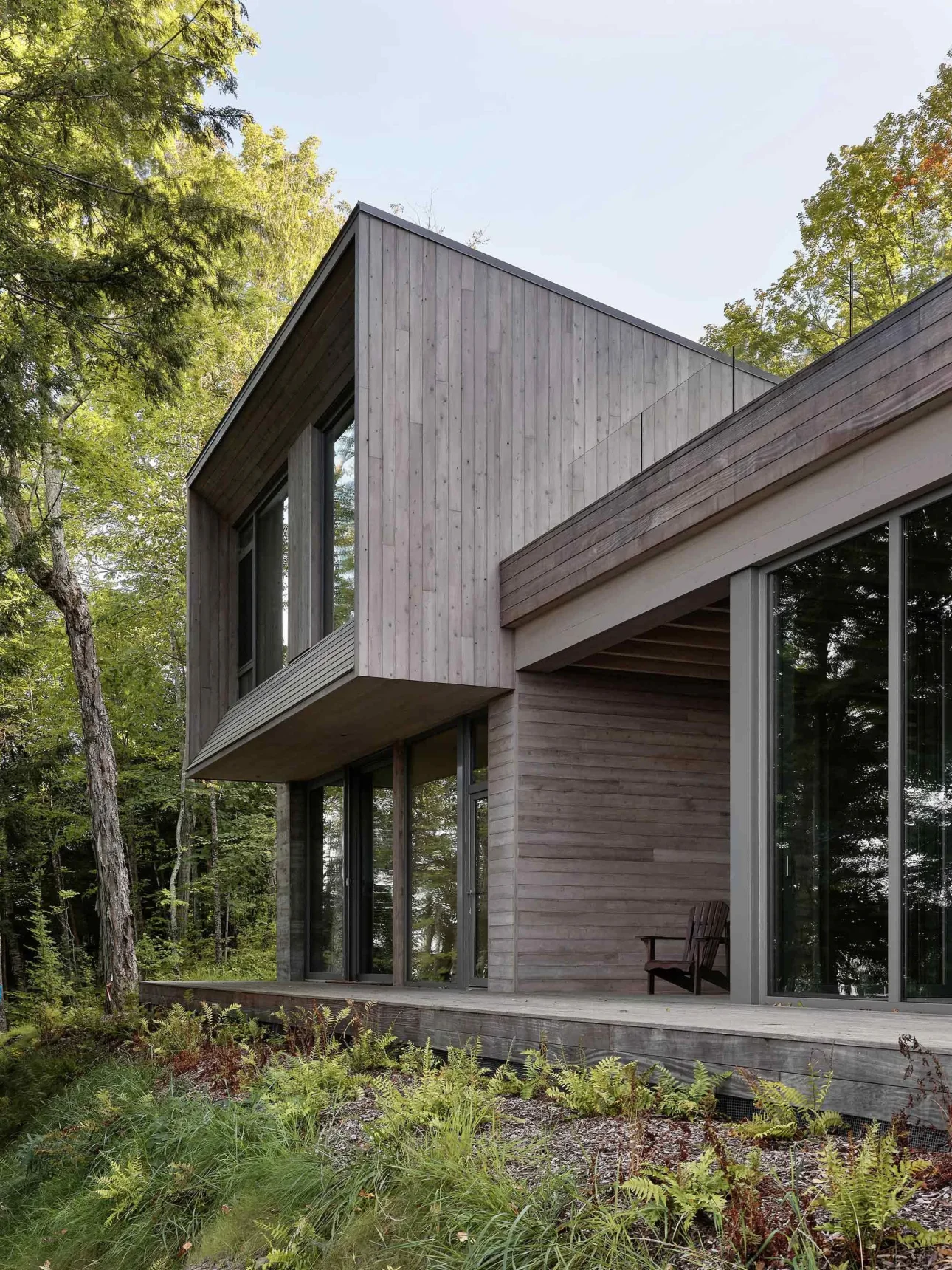
The architectural approach is rooted in a logic of retreat — not as erasure, but as a strategy to soften the built presence. Two distinct yet interrelated volumes emerge from the ground in a fragmented arrangement. Each is crowned with a dual-pitched roof (slope and counter-slope), a morphological solution that establishes a subtle dialogue with the lines of the landscape while breaking down the perceived scale of the building.
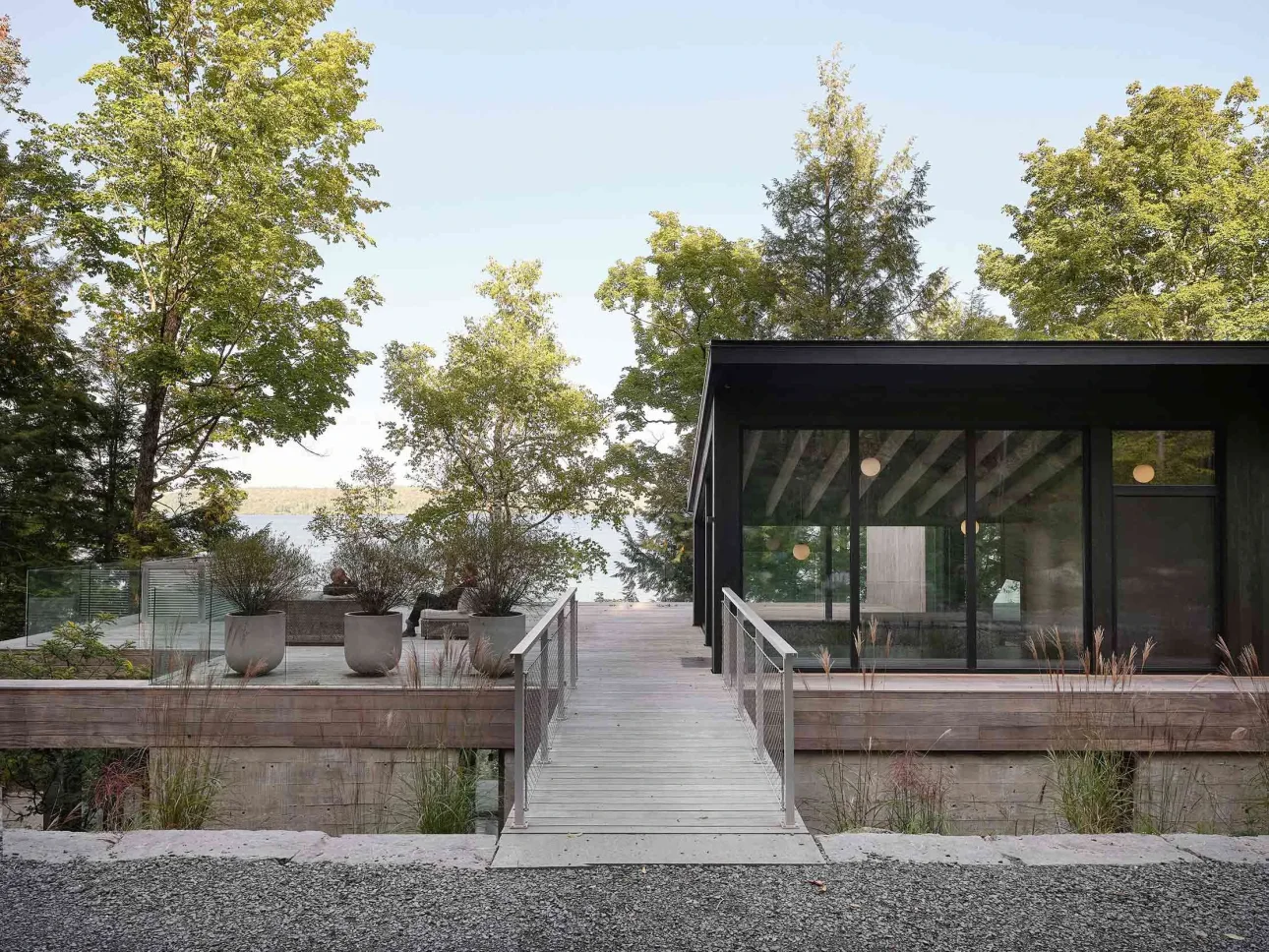
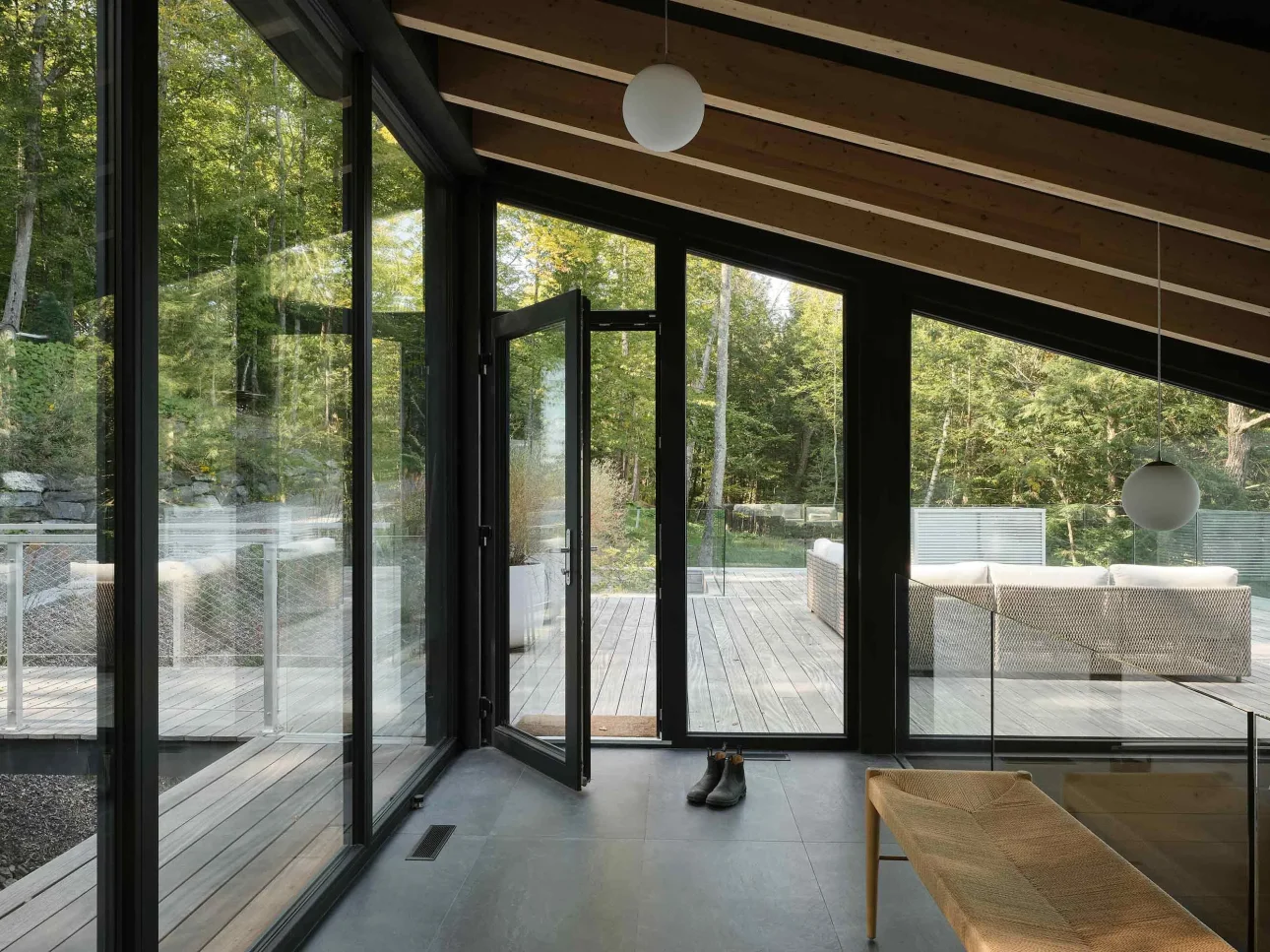
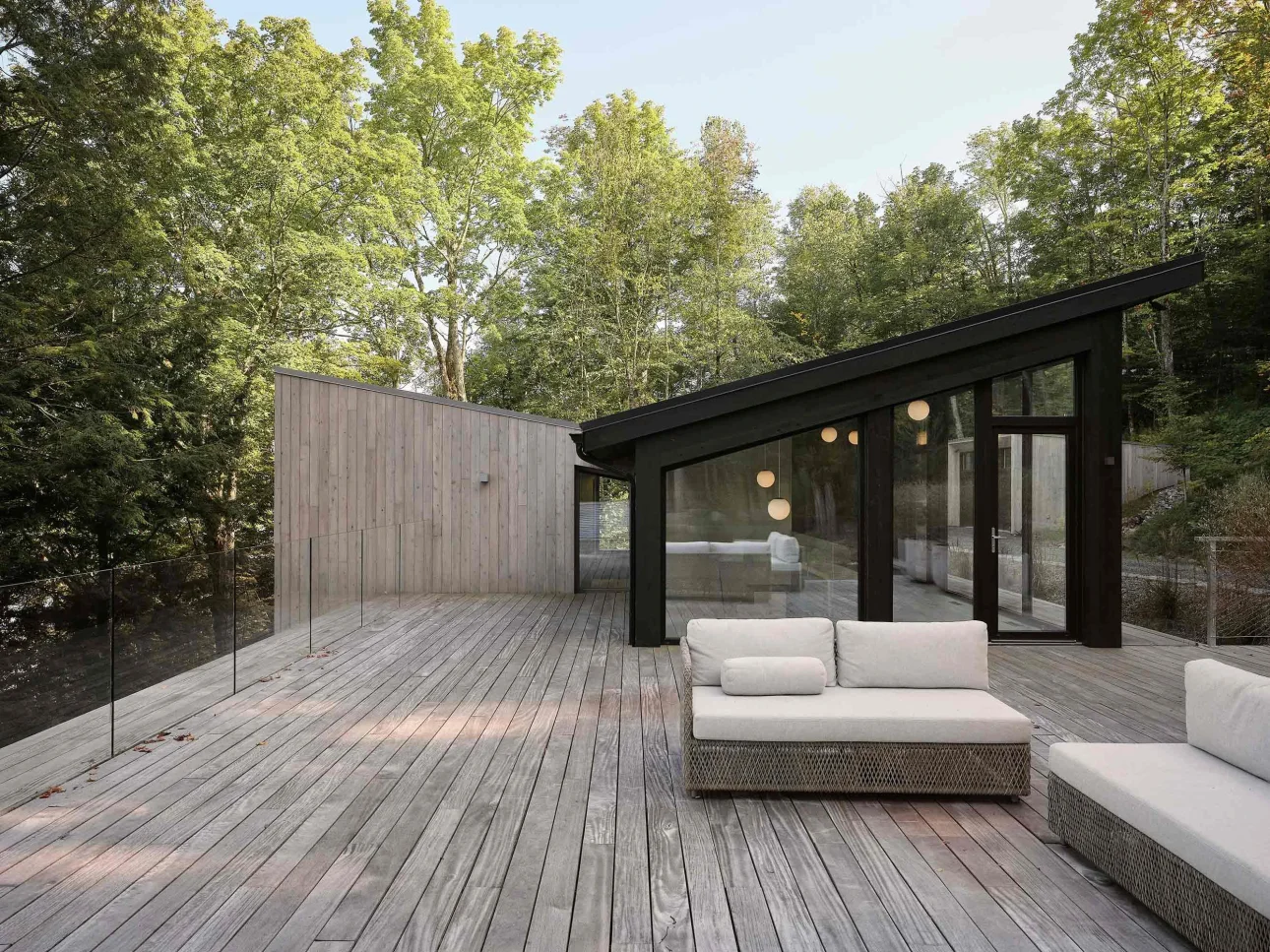
The roof of the main volume becomes an essential space: a belvedere functioning simultaneously as threshold, reception area, and visual vanishing point. This horizontal plane, rare on a site governed by a steep slope, acts as a hinge between architecture and landscape, between the experience of the ground and the projection toward the distance. It introduces an almost ritual dimension to the act of dwelling, where entry into the architecture occurs through a contemplative pause.
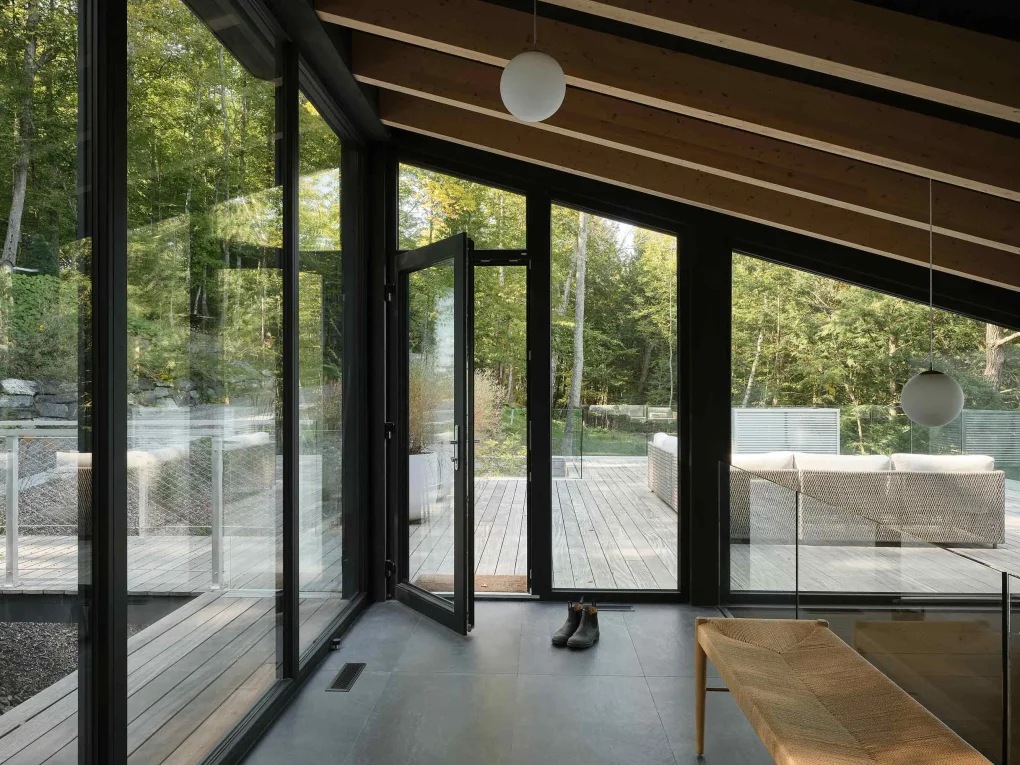
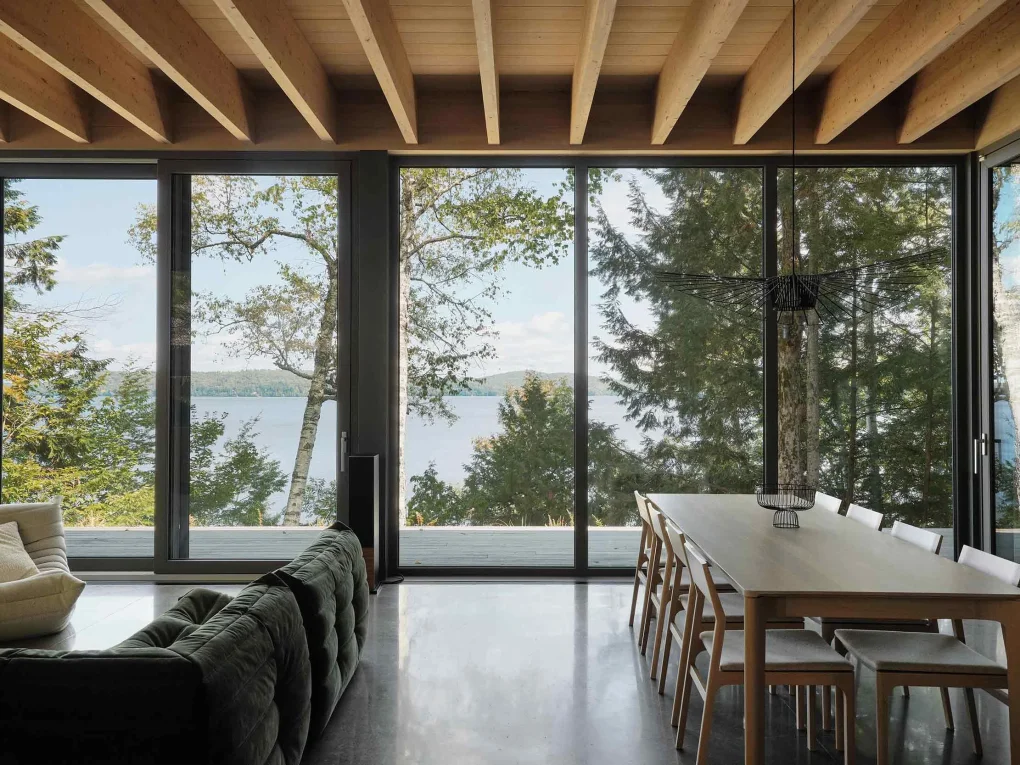
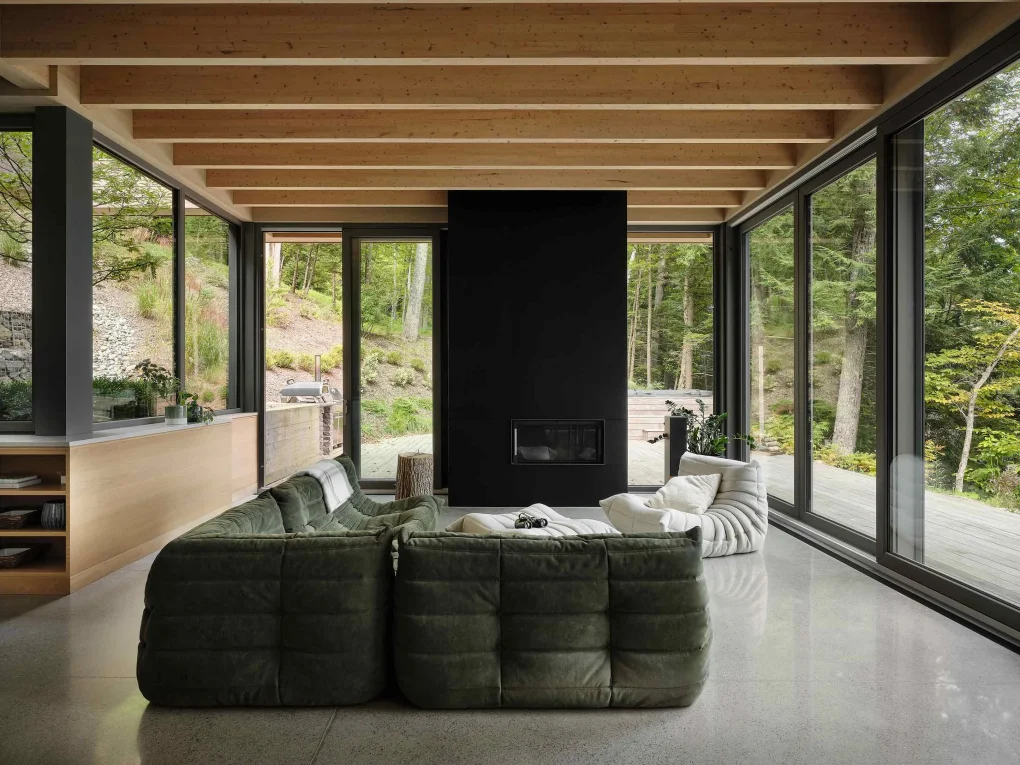
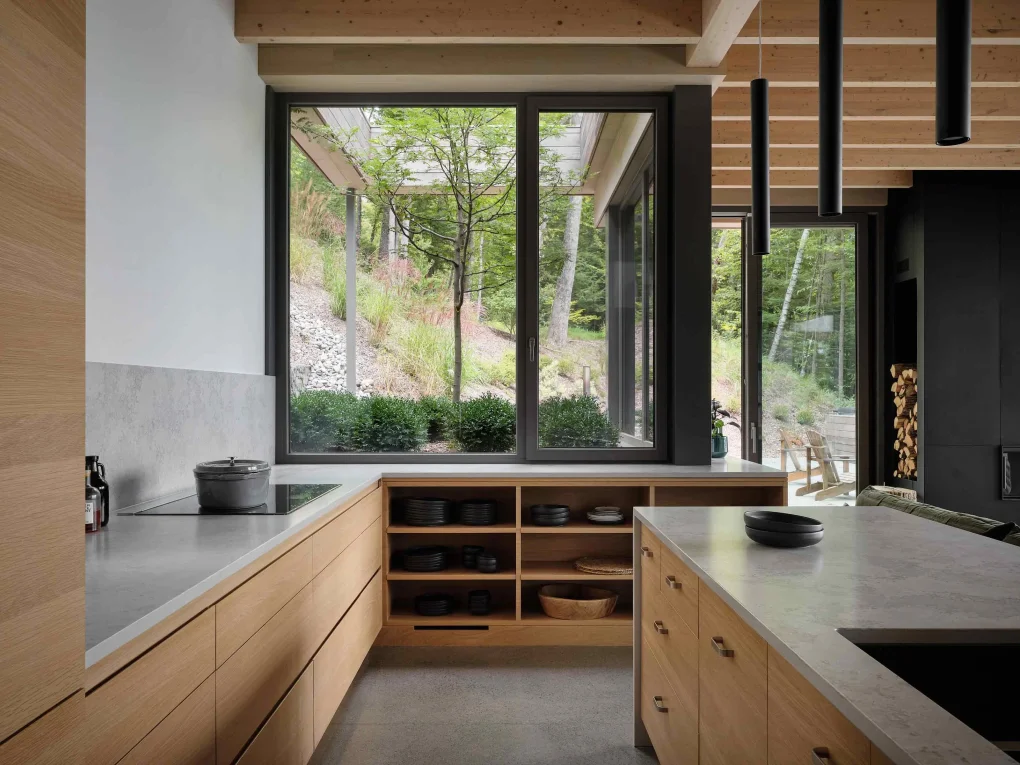
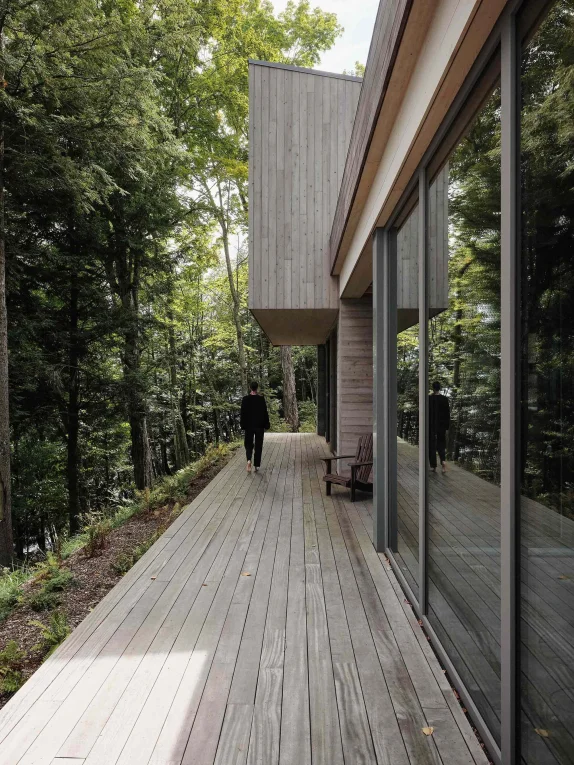
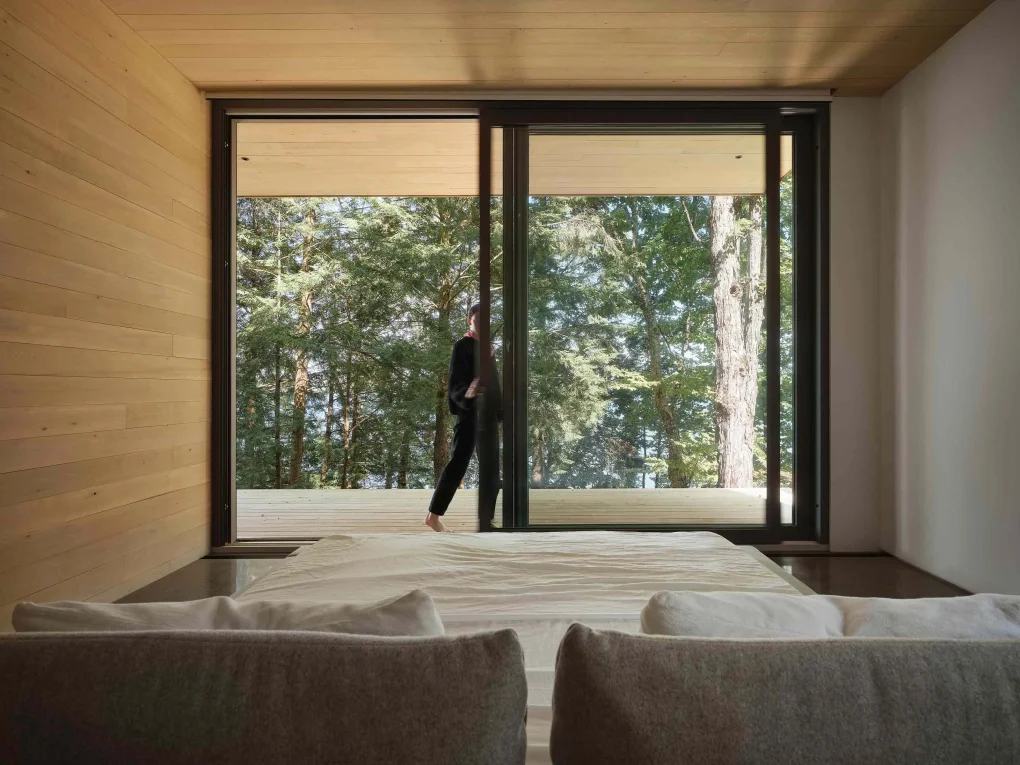
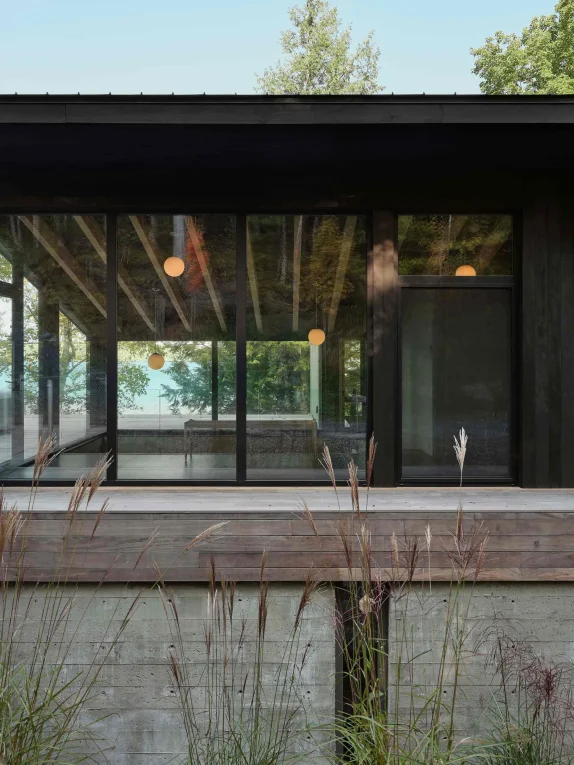
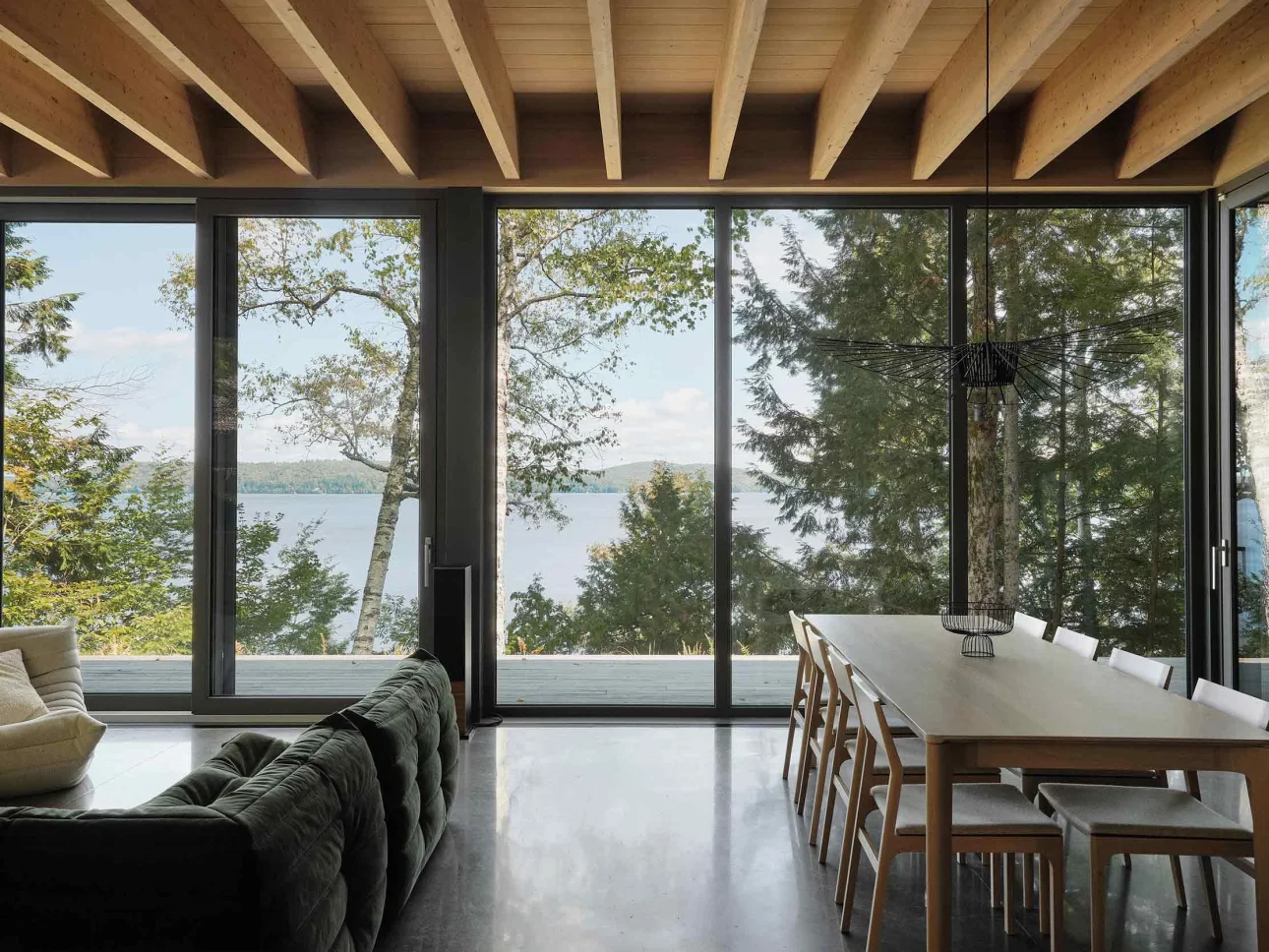
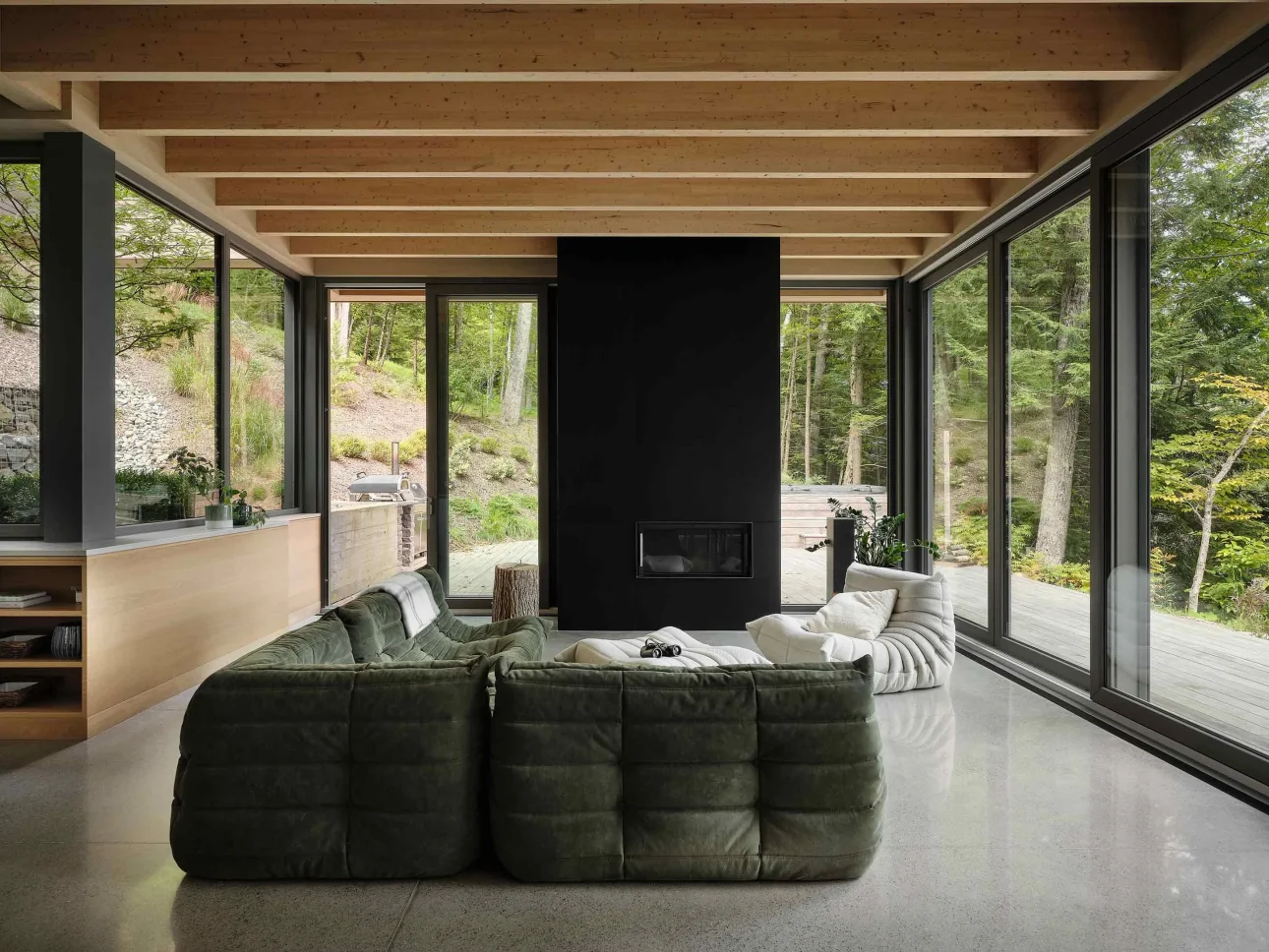
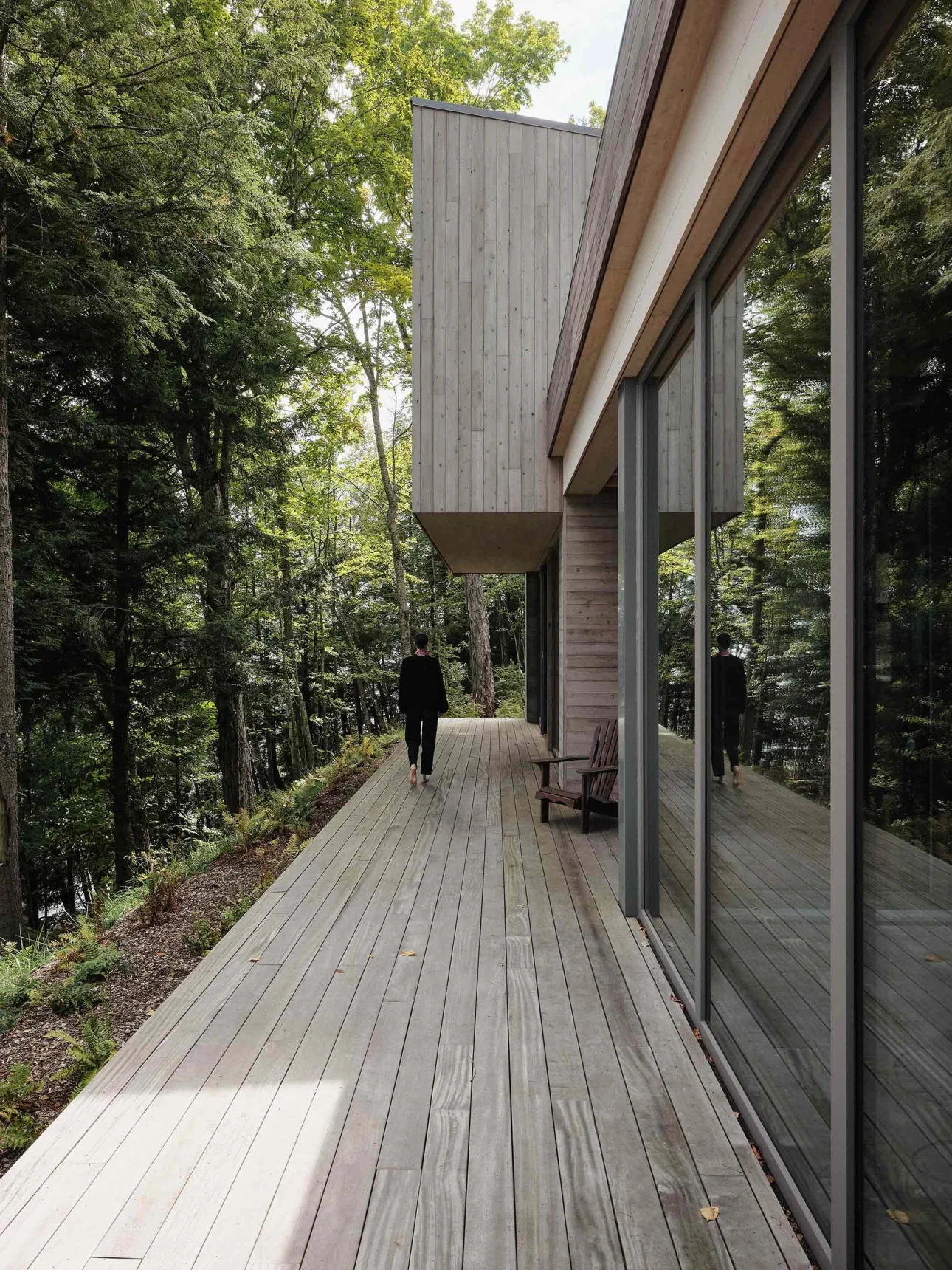
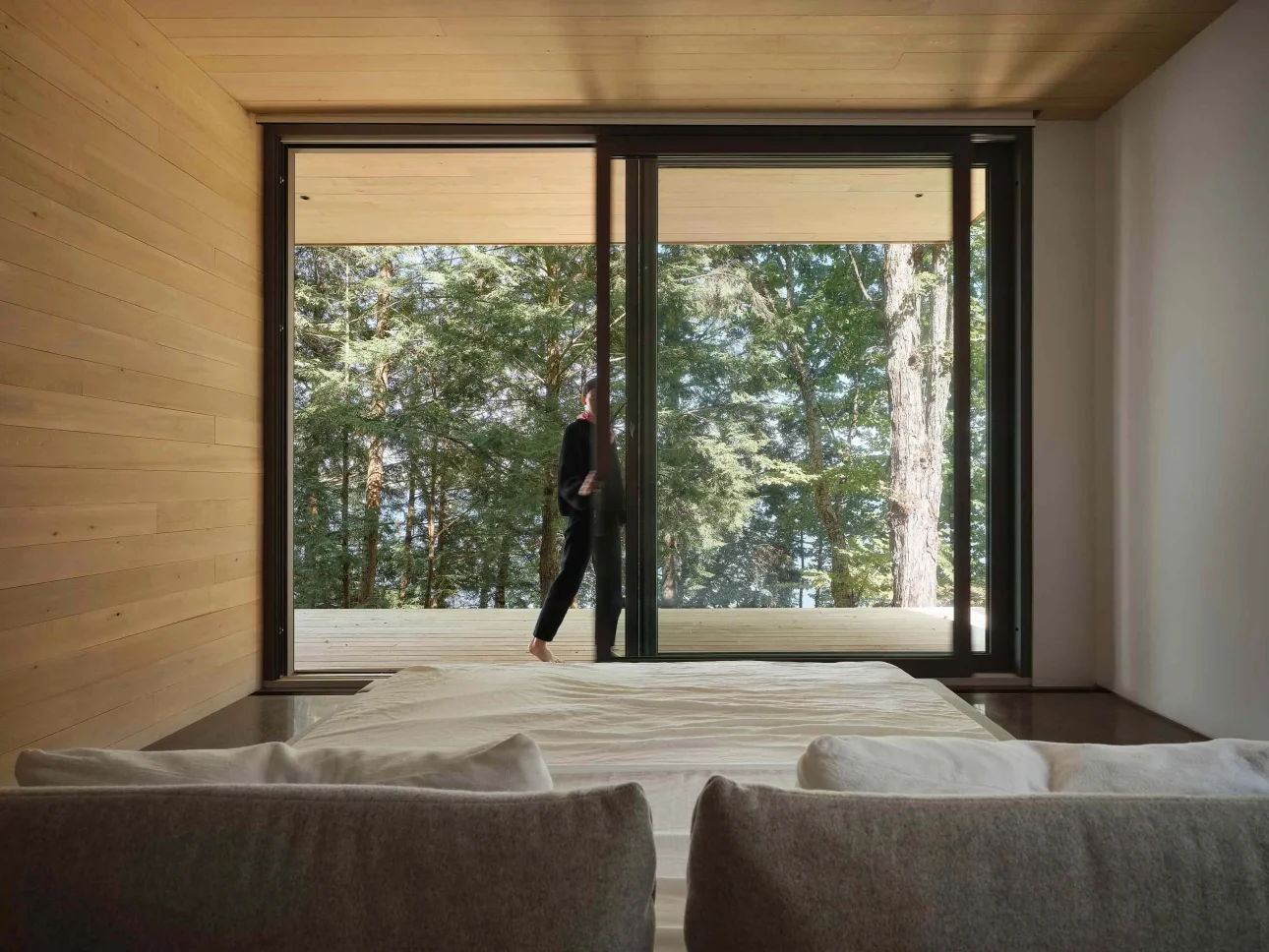
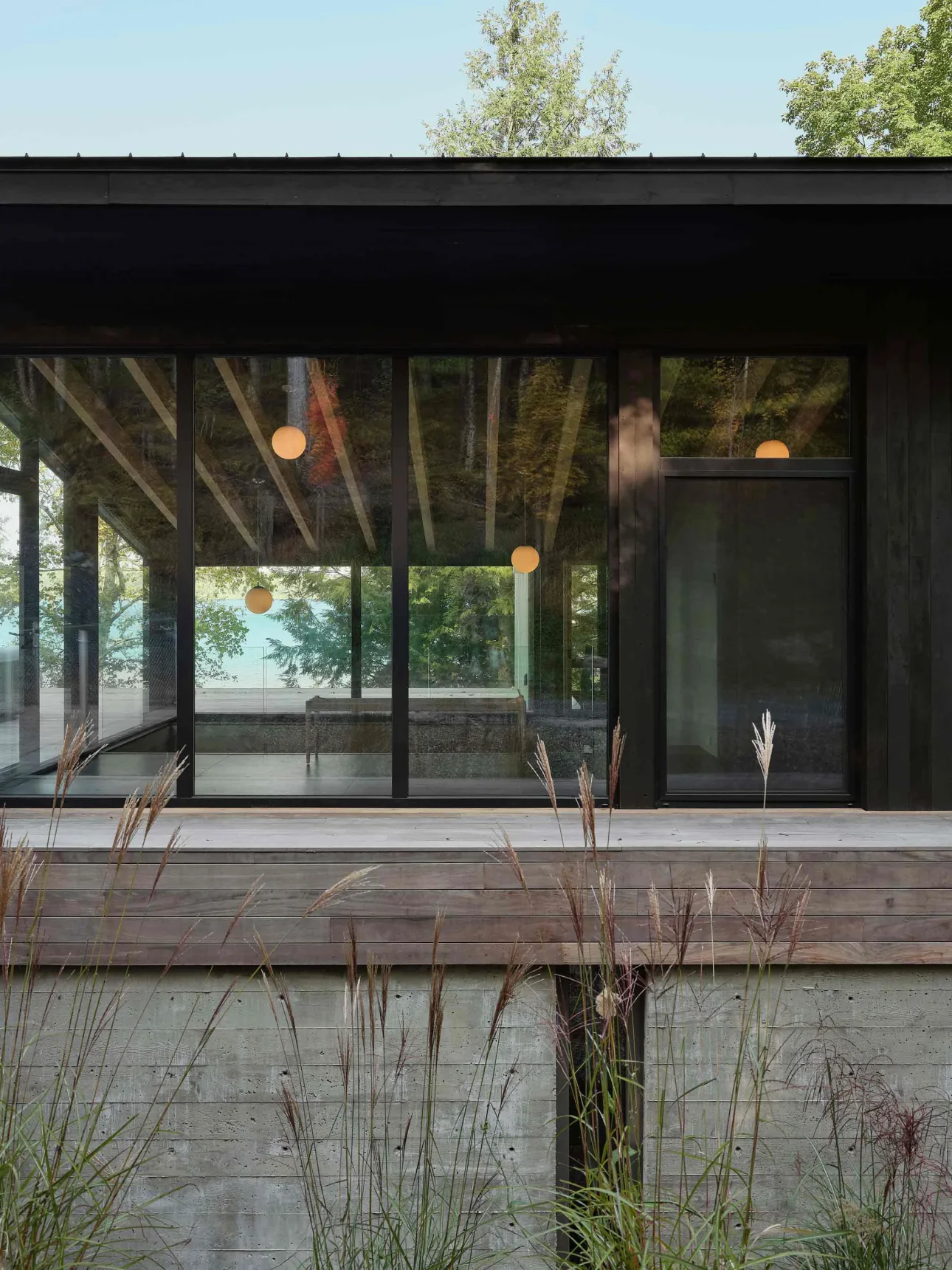
The main volume is organized according to a longitudinal logic, following the natural terrace of the land without excessive alteration of the terrain. This topographical positioning allows for a gentle, almost surreptitious insertion that emphasizes a form of constructive passivity. Interior spaces, oriented towards the lake through expansive glazed openings, dissolve the boundary between inside and outside. Through their extension into the exterior balconies, the floors become mediators, orchestrating a spatial porosity between habitation and landscape in which thresholds fade in favor of perceptual continuity.
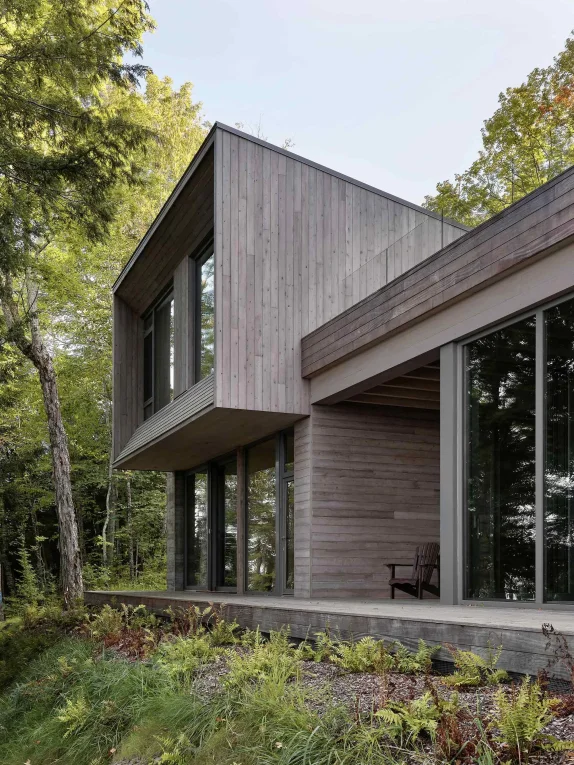
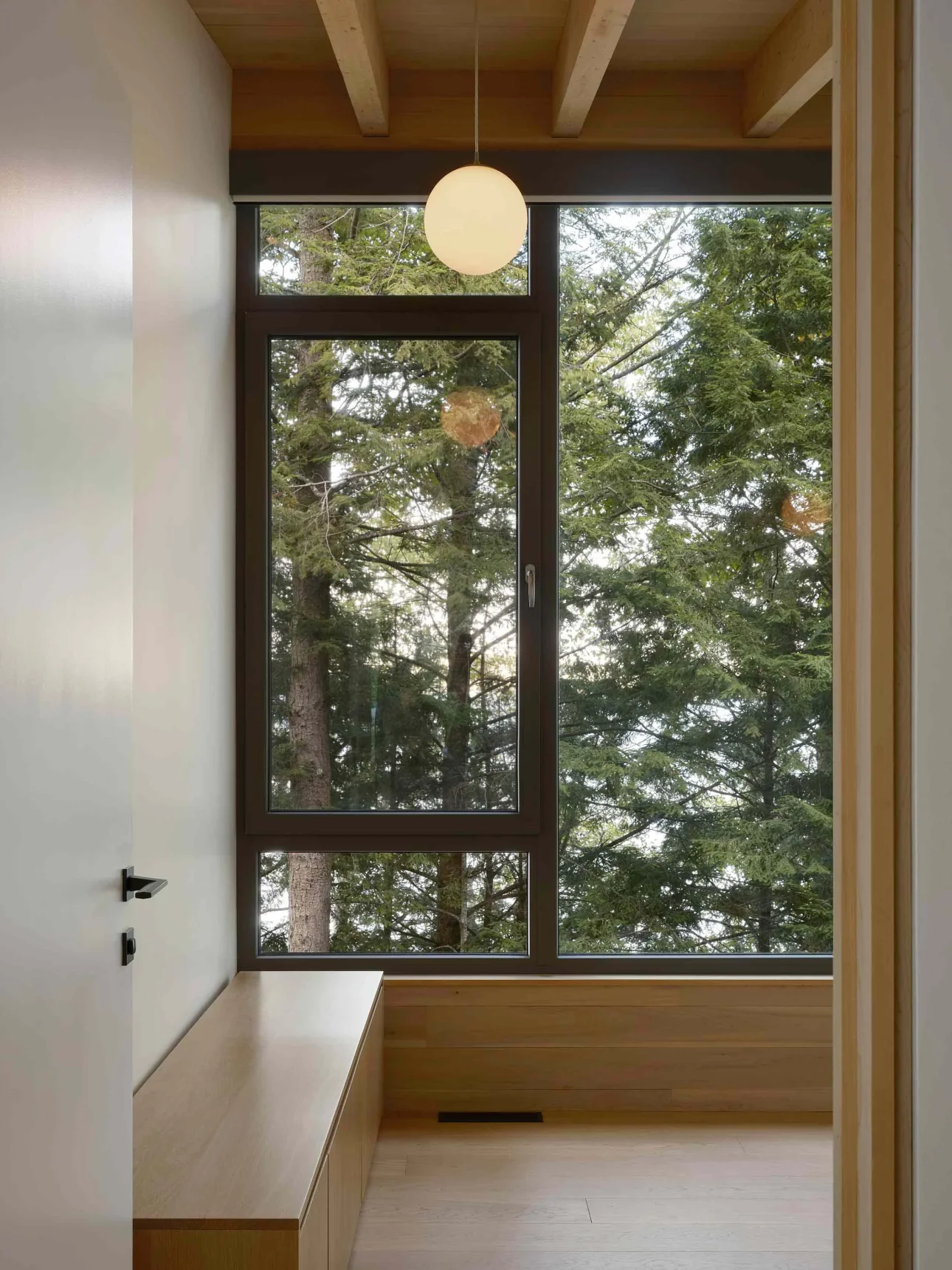
The two upper volumes, with their elongated forms, turn their backs to each other, orienting respectively towards the lake and the mountain. The bedrooms they contain are nestled within the trees, framed by the foliage as a living tableau.
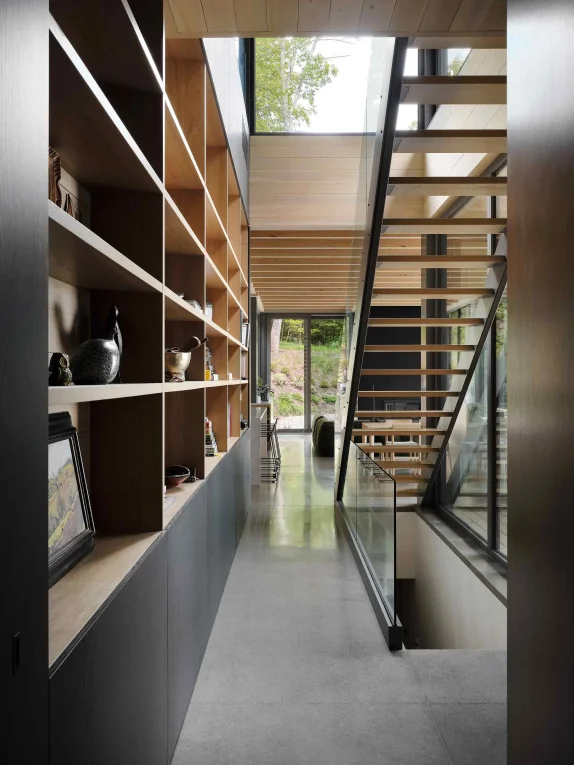
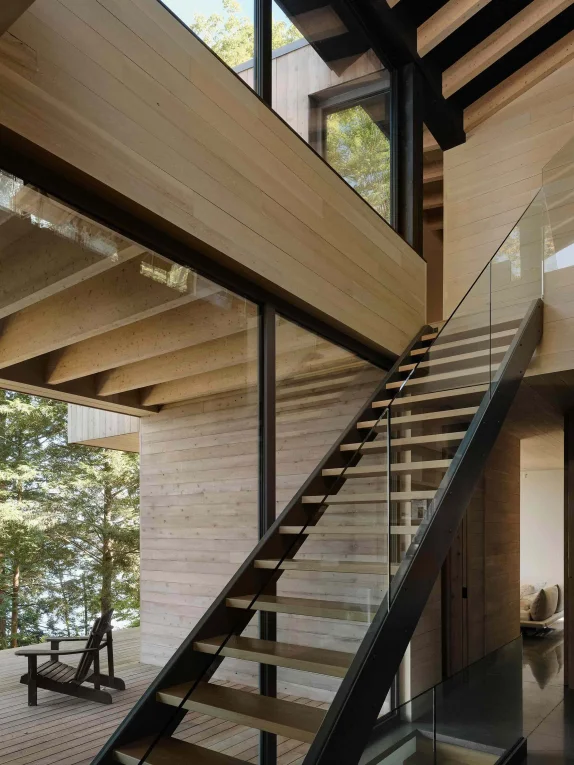
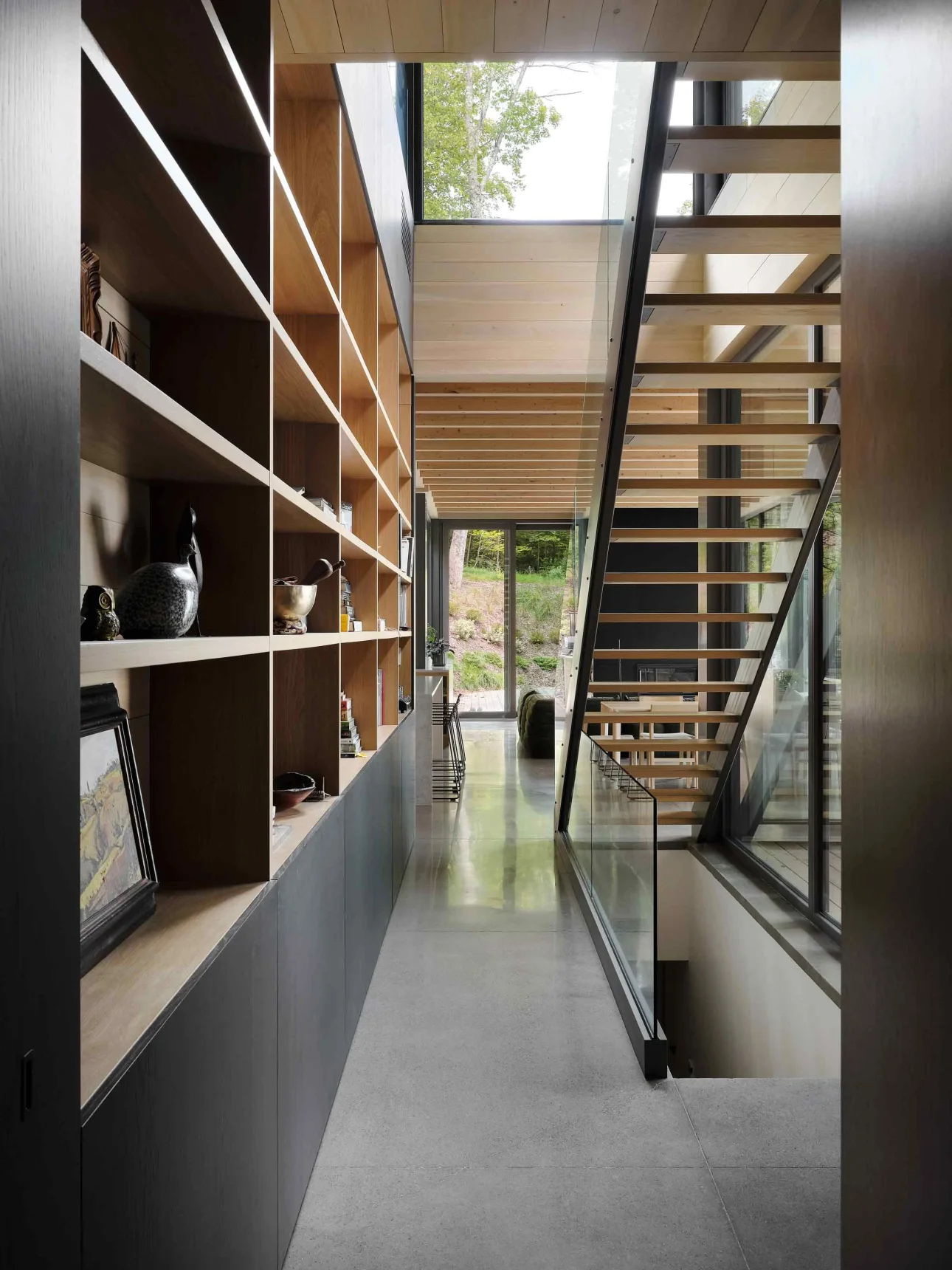
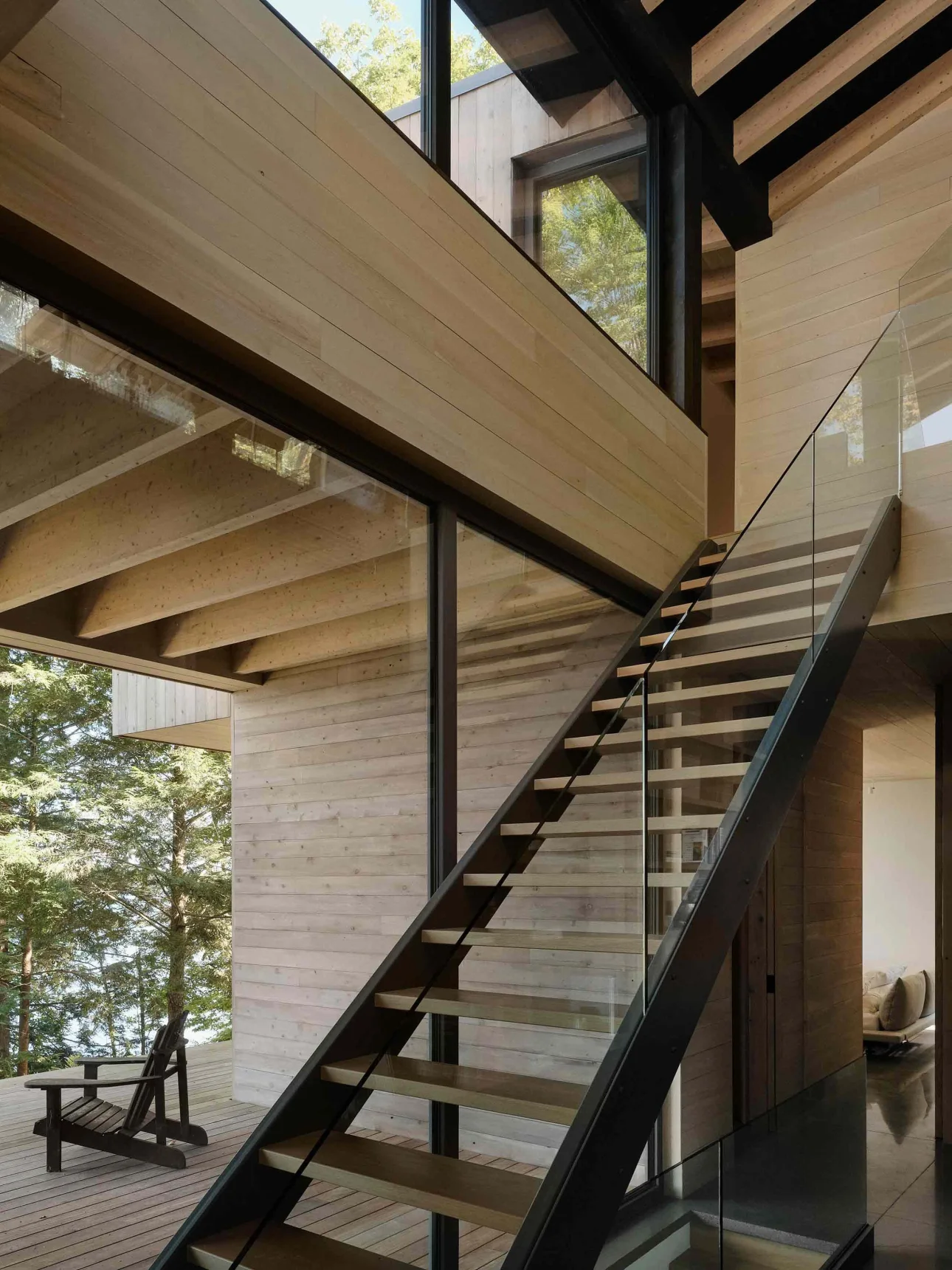
The spatial organization, directly influenced by the site’s topography, generates an inverted circulation sequence. Entry occurs from above, overlooking the lake, while the living spaces settle into contact with the ground, leaning against the slope within the intimacy of the site.
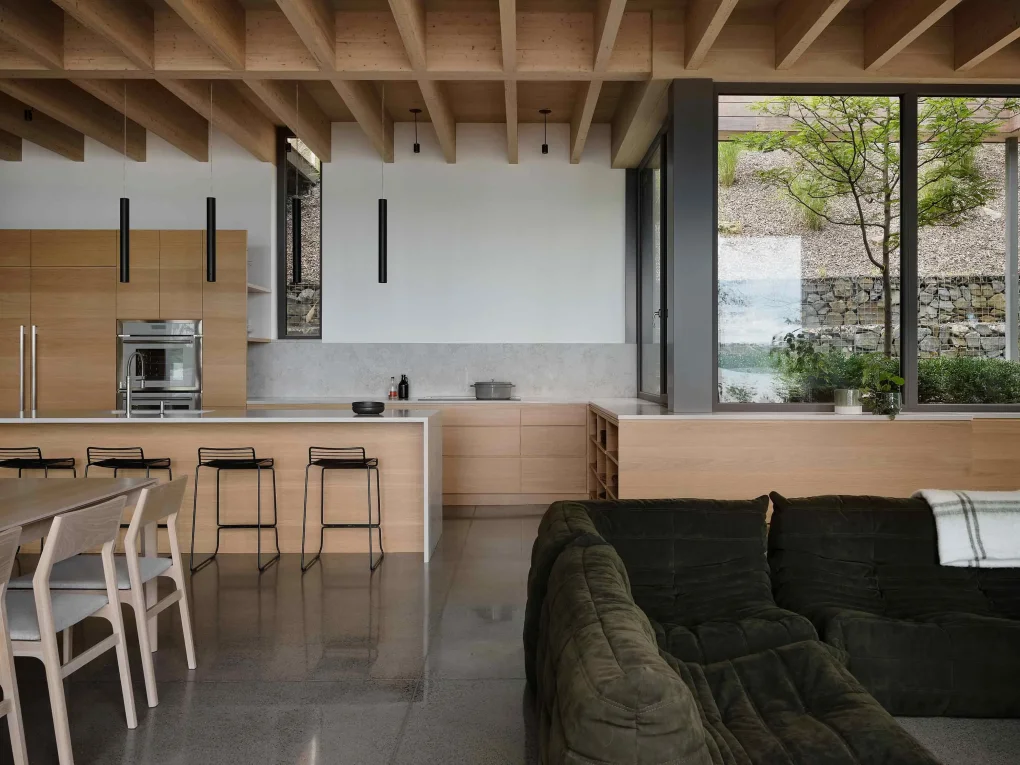
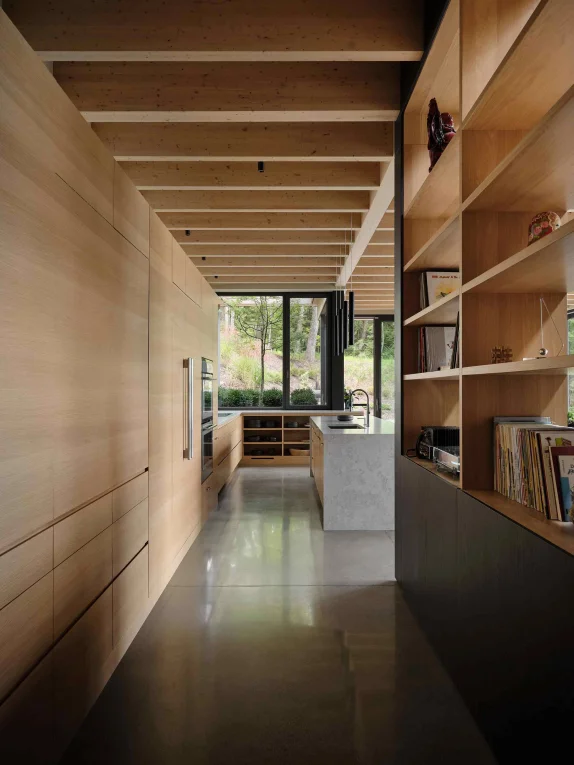
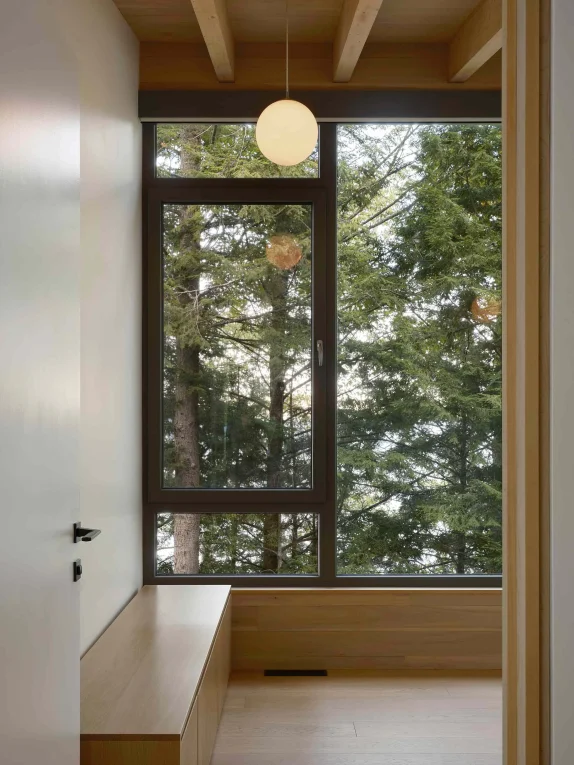
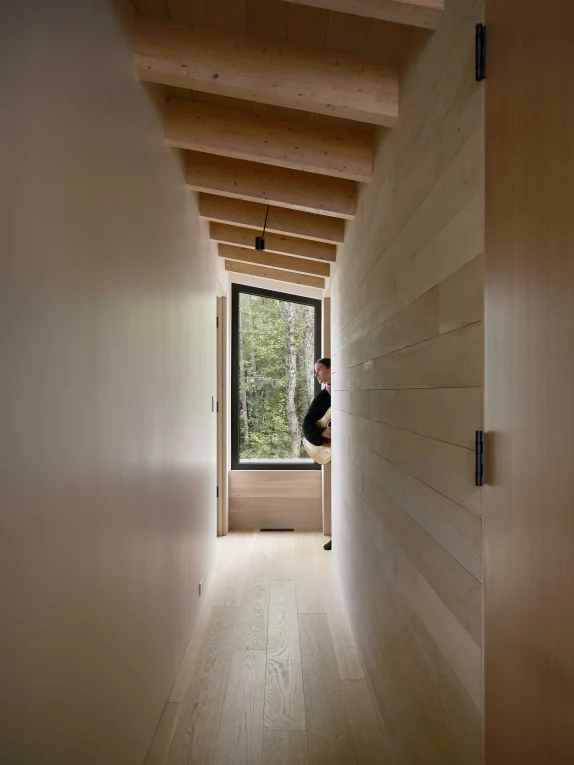
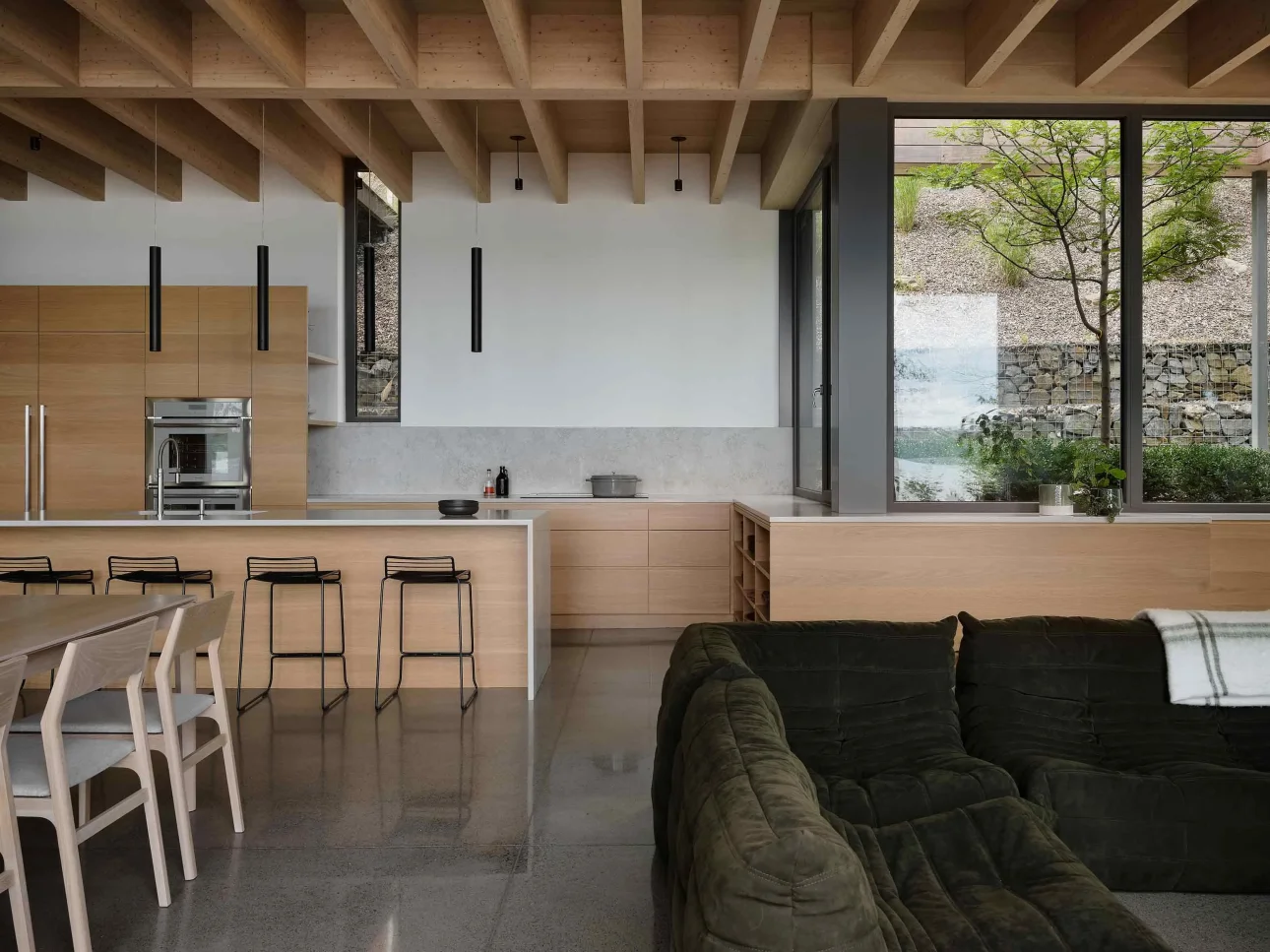
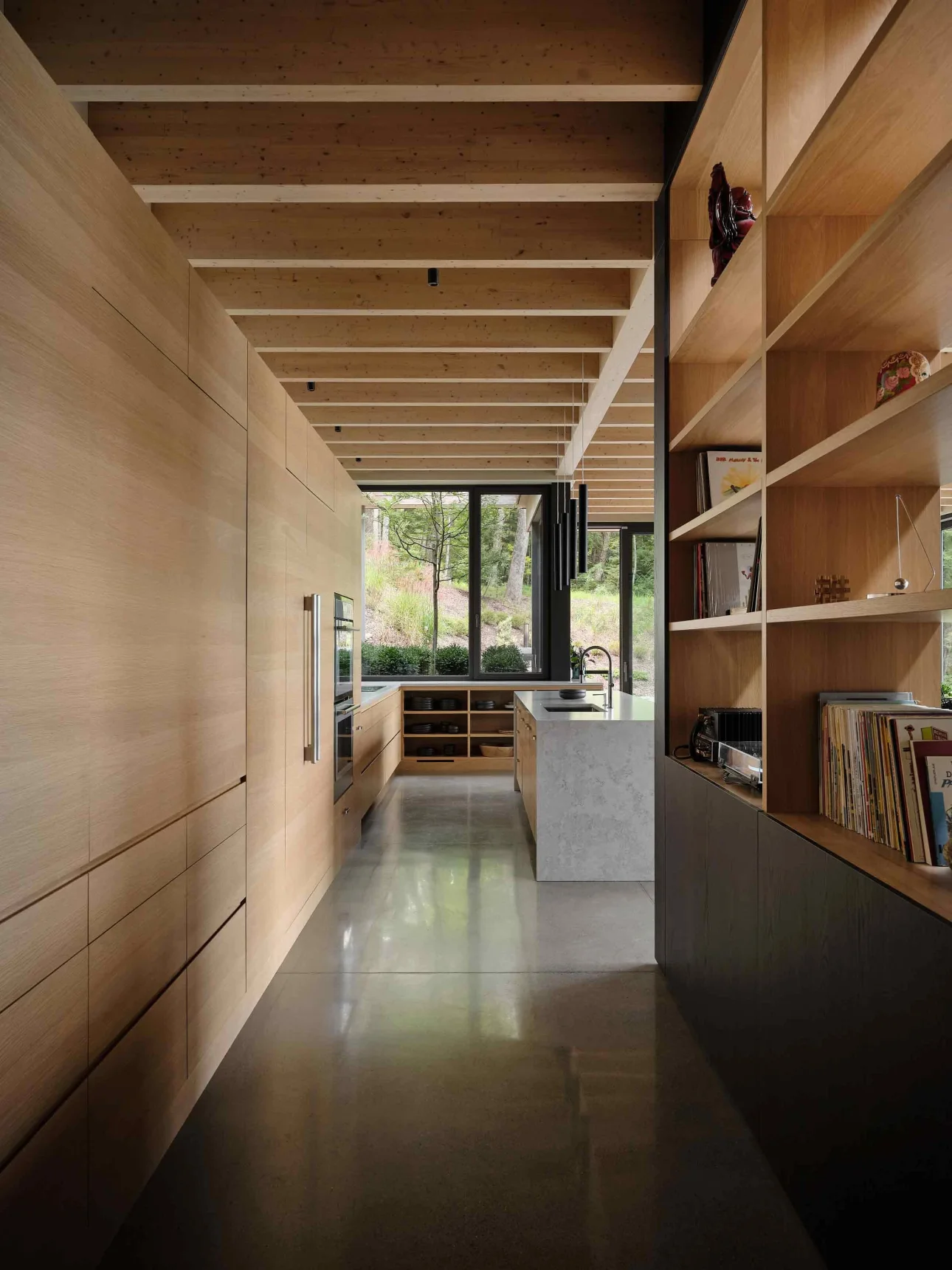
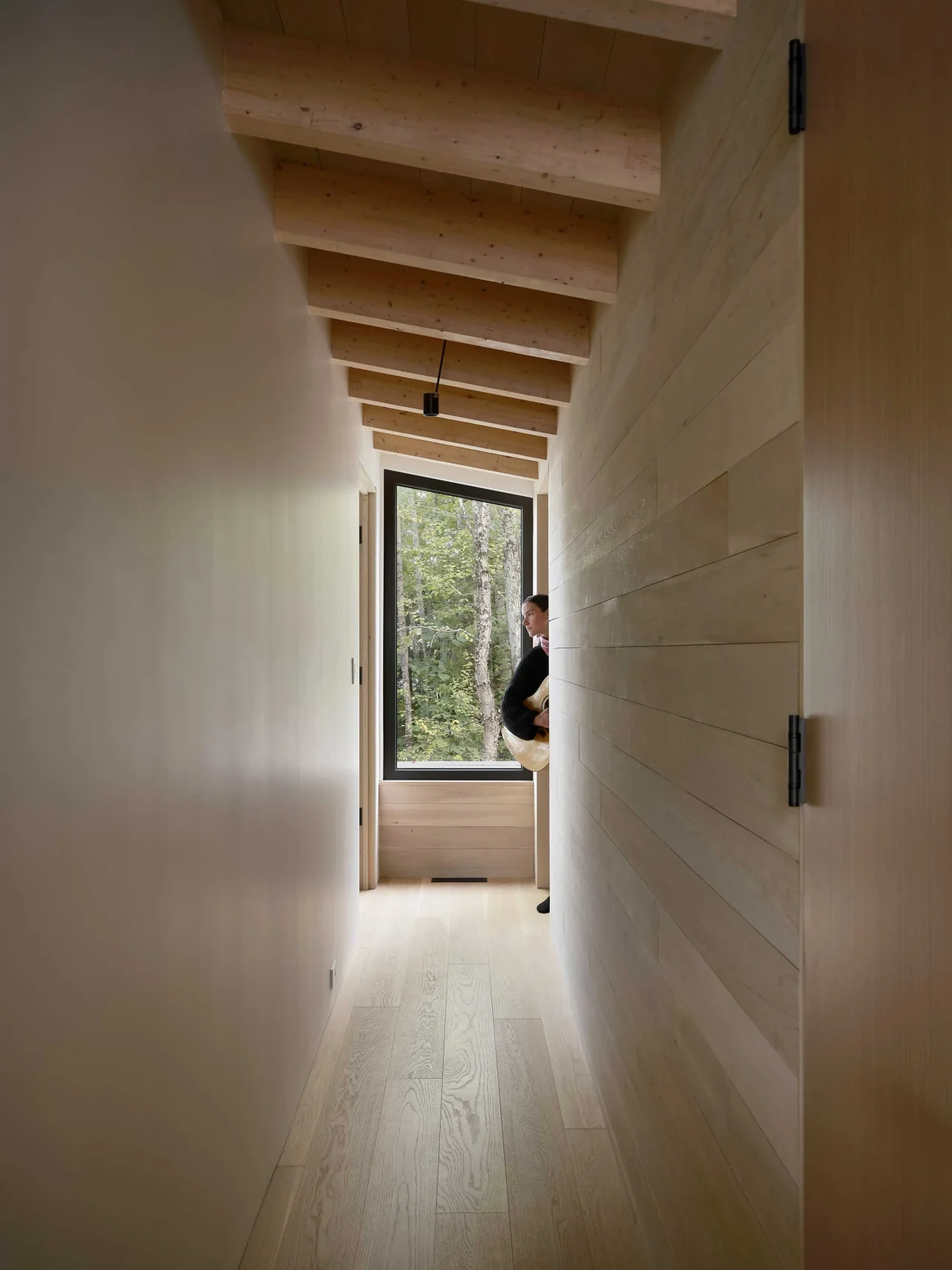
In response to the expressiveness of the place, the exposed timber structure is left raw. It punctuates movement through the house and acts as a guiding thread throughout the experience.
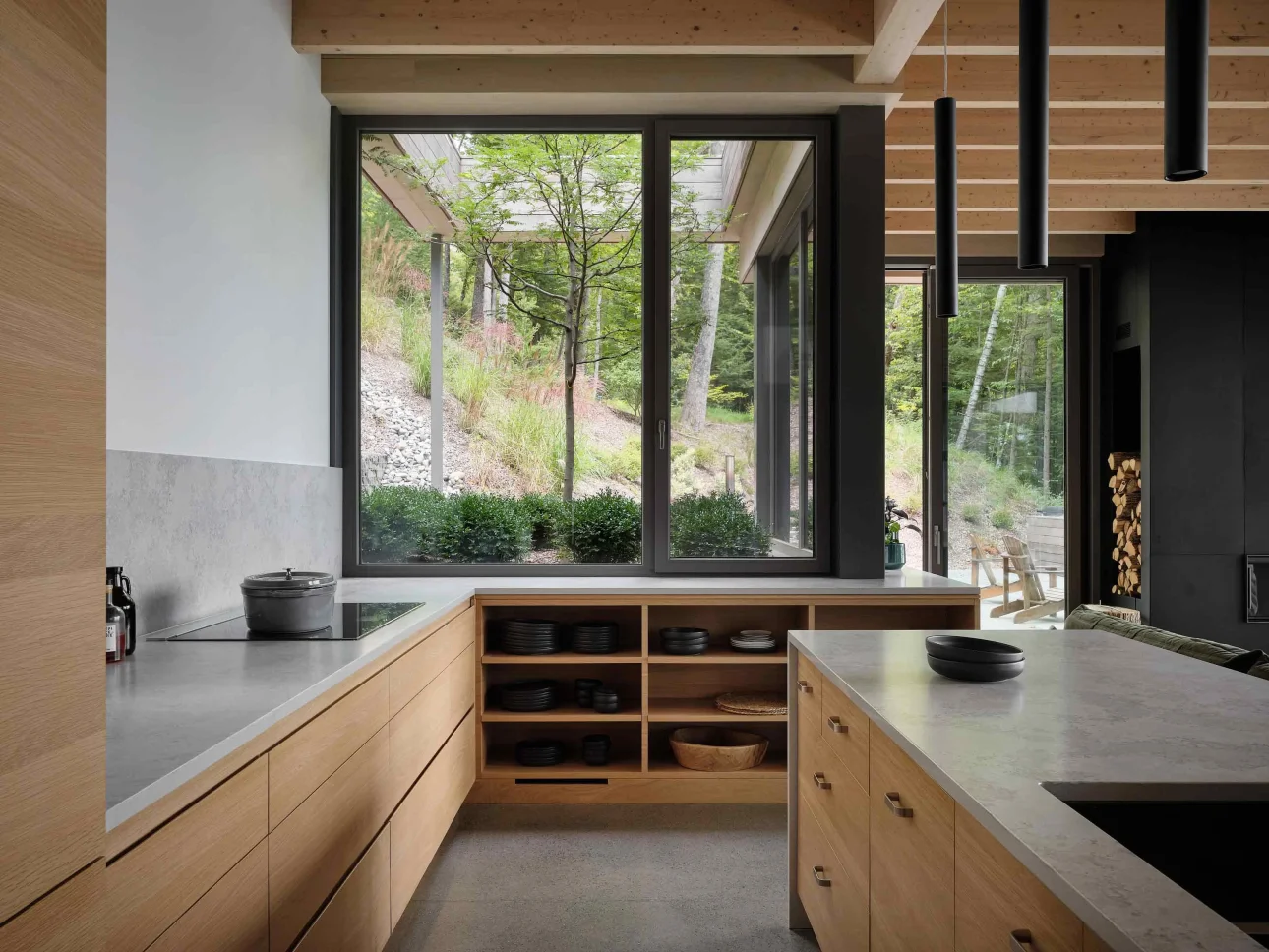
Materiality also contributes to this contextual language. The base of the house, in contact with the natural rock, is formed in cast-in-place concrete. Conversely, the natural cedar exterior cladding, left to weather over time, harmonizes chromatically with the vegetal and mineral textures of the site. Inside, white oak reintroduces a sense of warmth — almost domesticity — in contrast to the raw nature of the exterior. Black elements — frames, openings, details — operate as devices of framing, extending a concept of landscape as image and depth according to an almost painterly logic.
The project may ultimately be understood as an architectural meditation on landscape: neither pastiche nor rupture, but a carefully controlled tension between visibility and retreat; between architectural assertion and harmonious integration. It questions how architecture can inhabit a site not as an object, but as a condition for experiencing place — an architecture of subtraction that reveals more than it imposes.
- Area
- 4530 sq.ft.
- Design team
Marie-Claude Hamelin, architect
Loukas Yiacouvakis, architect
Karl Choquette, bachelor in architecture
Lisa Busmey, master in architecture- Construction team
Contractor
Construction Alain Pouliot Inc.Engineer
GénieX- Pictures credits
- Maxime Brouillet